
Back to School Routines for Kids: Complete Guide to Habits, Chores, and Financial Literacy
Back to School Routines for Kids: Complete Guide to Habits, Chores, and Financial Literacy
The end of summer vacation and the return to the classroom mark a major transition for families. Moving from flexible summer days to structured school schedules requires careful organization. Establishing clear back to school routines for kids reduces morning rush stress, eliminates homework battles, and creates a powerful educational opportunity to teach independence, accountability, and practical money habits.
In this comprehensive guide, we examine how to structure age-appropriate daily routines, coordinate household chores, and leverage modern family management apps like PagaKids to turn daily responsibilities into a rewarding habit.
Why Daily Routines Matter for School-Aged Children
Children thrive when expectations and schedules are predictable. Structured routines provide emotional security, reduce anxiety, and foster independence.
1. Developing Self-Regulation and Autonomy
When a child clearly knows what steps to follow from waking up to walking into the classroom, they stop relying on constant parental reminders. Daily repetition turns responsibilities into automatic habits, boosting confidence and self-esteem.
2. Reducing Parental Morning Stress
Pre-planned routines eliminate morning negotiations over breakfast, outfit choices, or misplaced backpacks. Parents can transition from constant nagging to supportive supervision.
3. Fostering Financial Responsibility with Allowance
The school year brings new responsibilities and personal expenses. Linking weekly pocket money or allowance to completed household chores teaches children the direct relationship between effort, consistency, and money management.
Age-Based Back to School Routine Breakdown
Different developmental stages require tailored levels of responsibility and guidance:
| Age Group | Morning Routine | Afternoon & Homework Chores | Allowance & Money Habits |
|---|---|---|---|
| Kindergarten & Early Years (Ages 4–6) | - Put on clothes laid out the night before. - Wash face and brush teeth. - Pack snack into backpack. | - Place shoes in hallway container. - Put away toys after playtime. - Put on pyjamas before dinner. | - Save physical coins in a piggy bank. - Learn to take care of school supplies. - Visual rewards with stickers or stars. |
| Early Elementary (Ages 7–9) | - Wake up with personal alarm clock. - Make bed independently. - Double check backpack items. | - 20 minutes of daily reading. - Clean up after afternoon snack. - Lay out next day’s clothes. | - Manage first fixed weekly allowance. - Track earnings and savings in PagaKids. - Save 20% toward a desired toy or goal. |
| Upper Elementary (Ages 10–12) | - Manage morning timeline autonomously. - Prepare a healthy breakfast. - Check school agenda and homework. | - Complete homework without direct nagging. - Keep study desk organized. - Place dirty clothes in laundry basket. | - Budget for minor school supplies. - Complete extra chores for bonus allowance. - Distinguish between wants vs needs. |
| Middle School (Ages 13–14) | - On-time departure for school. - Full management of tech and school gear. - Self-directed personal hygiene. | - Long-term exam study planning. - Shared family chores (dishwasher, trash). - Screen shutdown 1 hour before bedtime. | - Manage monthly allowance in PagaKids. - Save for tech or leisure goals. - Set medium-term financial targets. |
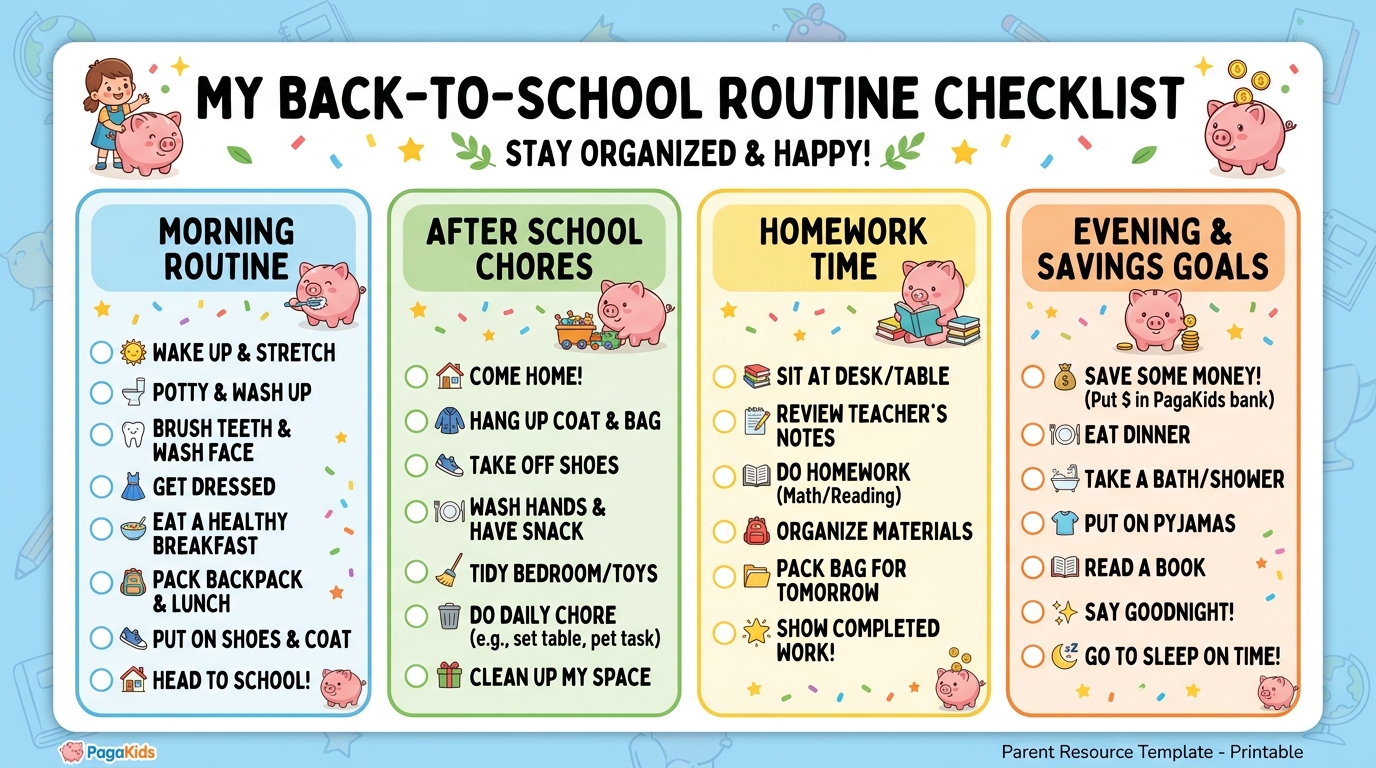
Download the Free Back-to-School Printable Routine Checklist
Enter your email address to instantly unlock the high-resolution printable checklist for your home.
How to Implement Back to School Routines Smoothly
To ensure your back to school routines are adopted without pushback, follow these proven steps:
Step 1: Hold a Family Kickoff Meeting
Sit down with your children before the school year starts. Frame the new academic year as a team effort where everyone gains new responsibilities and privileges. Let kids voice their opinions on their preferred chores.
Step 2: Use Visual Aids
Visual charts reinforce memory far better than spoken commands. Download and print the free routine checklist template provided above and display it in a prominent location at home.
Step 3: Automate Routine Tracking with PagaKids
In today’s digital world, family management technology makes habit tracking seamless and fun. PagaKids provides an all-in-one platform designed for parents and children:
- Transparent Task Assignment: Set daily and weekly home chores (making beds, 45-minute homework block, bedroom cleanup).
- Kid-Friendly Self-Checking: Children check off completed tasks on their own profile, developing personal accountability.
- Automated Allowance & Savings Goals: The app automatically tallies earned pocket money and savings progress, empowering kids to save safely without ads or behavioral tracking.
Frequently Asked Questions
Comparison: Traditional Methods vs PagaKids App
Educational Comparison
Traditional Cash vs PagaKids App
| Feature | Traditional Cash | PagaKids App ⚡ |
|---|---|---|
| Allowance Management | ✕ Loose cash bills, frequent coin loss | ✓ Real-time transparent digital piggy bank |
| Chore Assignment | ✕ Verbal reminders, recurring family arguments | ✓ Gamified checklist with automated rewards |
| Financial Education & Savings | ✕ Immediate impulse spending without goals | ✓ Savings milestones with progress bar (+40% retention) |
| Safety & Privacy | ✕ Risk of stolen or misplaced physical cash | ✓ 100% card-free safe environment, COPPA & GDPR-K compliant |
Conclusion: Transform Back to School into a Growth Opportunity
Establishing back to school routines for kids isn’t about rigid control—it’s about giving children the structure they need to build confidence, independence, and financial literacy. By combining visual printable checklists with smart family tools like PagaKids, you can turn daily household responsibilities into an engaging, empowering team effort.
Automate allowance & kids chores
Download PagaKids for Android and set family savings goals in under 2 minutes.